
The landscape of healthcare is rapidly evolving, with telemedicine emerging as a transformative force. No longer confined to science fiction, virtual consultations, remote monitoring, and digital health education are becoming integral parts of modern medical practice. This exploration delves into the multifaceted world of telemedicine medical services, examining its capabilities, challenges, and future potential.
From improving access to care in underserved communities to enhancing patient engagement through remote monitoring, telemedicine offers a wealth of opportunities. However, navigating the legal, ethical, and technological complexities requires careful consideration. This overview aims to provide a clear and comprehensive understanding of this dynamic field, highlighting both its advantages and limitations.
Legal and Ethical Considerations in Telemedicine
Telemedicine, while offering significant advantages in healthcare accessibility and efficiency, introduces a new set of legal and ethical considerations that require careful navigation. These considerations vary across jurisdictions and necessitate a comprehensive understanding of relevant laws and ethical principles to ensure responsible and compliant practice.
Legal Frameworks and Regulations Governing Telemedicine
The legal landscape for telemedicine is complex and differs significantly across countries and even within states or provinces. Some jurisdictions have specific legislation addressing telemedicine, while others rely on existing medical licensing and practice regulations, adapting them to the virtual environment. For example, licensing requirements for telehealth providers often stipulate the need for a license in the state or province where the patient resides, regardless of the provider’s physical location.
Data privacy regulations, such as HIPAA in the United States and GDPR in Europe, also play a crucial role in defining permissible data handling practices. Furthermore, regulations regarding malpractice liability and informed consent often need to be interpreted and applied within the context of remote consultations. Staying abreast of these evolving legal requirements is paramount for all telemedicine practitioners.
Ethical Challenges Related to Patient Privacy, Data Security, and Informed Consent
Telemedicine presents unique ethical challenges concerning patient privacy, data security, and informed consent. The transmission of sensitive patient information electronically increases the risk of data breaches and unauthorized access. Ensuring robust data encryption and security protocols is crucial to mitigate these risks. Moreover, obtaining truly informed consent in a remote setting requires clear and concise communication about the limitations and risks of telemedicine, including potential technical difficulties and the possibility of delayed or limited access to care.
The ethical considerations also extend to issues of patient autonomy and the potential for biases in access to telemedicine services, particularly for vulnerable populations.
Best Practices for Ensuring Patient Confidentiality and Data Protection
Implementing robust security measures is critical for protecting patient data in telemedicine. This includes using strong encryption protocols for all data transmitted and stored, employing secure platforms and applications, and regularly updating software to address vulnerabilities. Strict adherence to data privacy regulations is essential, involving appropriate access controls and data minimization practices. Furthermore, comprehensive training for all staff involved in handling patient data is crucial to foster a culture of data protection.
Regular security audits and penetration testing can identify and address potential weaknesses in the system. Finally, developing clear protocols for data breaches and incident response is vital to minimize the impact of any security incidents.
Key Legal and Ethical Considerations for Various Telemedicine Scenarios
| Scenario | Legal Considerations | Ethical Considerations | Best Practices |
|---|---|---|---|
| Remote Diagnosis and Treatment | Licensing requirements, malpractice insurance, adherence to relevant medical practice standards. | Informed consent, patient autonomy, potential for misdiagnosis due to limited physical examination. | Detailed documentation, clear communication with patients, referral to in-person care when necessary. |
| Sharing Patient Data with Other Providers | HIPAA compliance (US), GDPR compliance (EU), patient authorization for data sharing. | Maintaining patient confidentiality, ensuring data security during transmission. | Secure data transfer methods, obtaining explicit patient consent, anonymizing data whenever possible. |
| Telepsychiatry | Specific licensing requirements for mental health professionals, considerations regarding patient safety and suicide risk. | Maintaining patient confidentiality, addressing potential biases in diagnosis and treatment. | Crisis protocols, regular monitoring of patient well-being, collaboration with in-person support systems. |
| Remote Monitoring of Chronic Conditions | Data privacy regulations, regulations concerning the use of medical devices. | Data security, patient autonomy in data sharing, potential for alert fatigue. | Secure data storage and transmission, clear communication about data usage, patient education on device use. |
The Role of Medical Devices in Telemedicine
Telemedicine’s effectiveness hinges significantly on the integration of medical devices. These devices allow for remote patient monitoring, data collection, and even preliminary diagnosis, extending the reach and capabilities of healthcare providers beyond the confines of a traditional clinic. This integration transforms healthcare delivery, enabling proactive interventions and improved patient outcomes.The seamless integration of medical devices into telemedicine systems facilitates remote patient monitoring (RPM) and remote diagnostics.
Data collected by these devices is transmitted securely to healthcare professionals, allowing for continuous monitoring of a patient’s vital signs and other health parameters. This continuous stream of data enables timely interventions, reducing hospital readmissions and improving overall health management.
Examples of Medical Devices in Telemedicine
Several medical devices are instrumental in telemedicine applications. Wearable sensors, such as smartwatches and fitness trackers, continuously monitor heart rate, activity levels, sleep patterns, and sometimes even blood oxygen saturation. These devices provide valuable data for managing chronic conditions like heart failure or diabetes. Remote diagnostic tools include digital stethoscopes that transmit heart and lung sounds to a physician, allowing for remote auscultation.
Other examples include blood pressure monitors with Bluetooth connectivity, glucometers that wirelessly transmit glucose readings, and even electrocardiogram (ECG) devices that can provide a basic EKG reading for analysis by a cardiologist. Furthermore, more advanced devices, like remote patient-controlled infusion pumps, allow for the precise and safe administration of medication from a distance, under the guidance of a physician.
Accuracy and Reliability of Remote Diagnostic Tools
The accuracy and reliability of remote diagnostic tools vary considerably depending on the device and the specific application. While some devices, like remote blood pressure monitors, offer comparable accuracy to traditional methods when used correctly, others may require careful calibration and interpretation. For example, while a remote ECG might detect arrhythmias, its interpretation requires expertise, and it may not detect subtle abnormalities that a traditional 12-lead ECG in a clinic might reveal.
The reliability of the data also depends on factors like the patient’s proper use of the device and the quality of the wireless connection. Therefore, remote diagnostic tools are often best used as supplementary tools, aiding in early detection and guiding decisions, rather than replacing traditional in-person examinations entirely.
Advantages and Disadvantages of Using Medical Devices in Telemedicine
The use of medical devices in telemedicine presents several advantages and disadvantages. It’s crucial to weigh these carefully to optimize the implementation and effectiveness of these technologies.
- Advantages: Improved patient monitoring, increased access to care, especially for those in remote areas or with mobility issues; early detection of health issues, leading to timely interventions; enhanced patient engagement and empowerment through self-monitoring; reduced healthcare costs through decreased hospital readmissions and fewer in-person visits; improved efficiency for healthcare providers by streamlining data collection and analysis.
- Disadvantages: Potential for inaccurate data due to incorrect device use or technical issues; privacy and security concerns related to the transmission of sensitive patient data; the digital divide, excluding patients without access to technology or reliable internet connectivity; the need for ongoing technical support and training for both patients and healthcare providers; reliance on patient adherence to using the devices correctly and consistently; potential for increased workload for healthcare providers if not properly integrated into workflows.
The Impact of Medical Research on Telemedicine Advancements
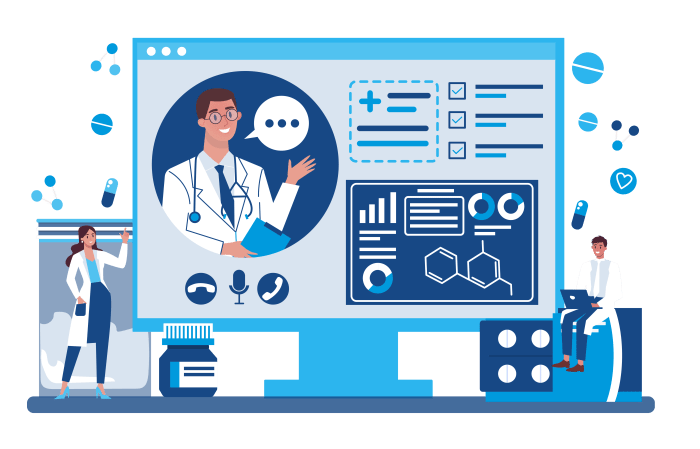
Medical research plays a pivotal role in shaping the evolution and efficacy of telemedicine. It provides the evidence base necessary to understand its impact, identify areas for improvement, and drive the development of innovative technologies and practices. This research spans a wide range of disciplines, including medicine, engineering, computer science, and public health, working collaboratively to optimize telemedicine’s potential.The contribution of medical research extends to refining existing telemedicine applications and inspiring the creation of entirely new ones.
Studies rigorously assess the effectiveness and efficiency of various telemedicine interventions across diverse healthcare settings and patient populations, providing crucial insights for policy makers and healthcare providers.
Effectiveness and Efficiency of Telemedicine Interventions
Numerous research studies have explored the effectiveness of telemedicine across various medical specialties. For instance, randomized controlled trials have demonstrated the efficacy of telehealth interventions for managing chronic conditions like diabetes and heart failure, showing improvements in patient outcomes, such as better blood sugar control or reduced hospital readmissions. Similarly, research has shown positive results for using telemedicine in mental health, with studies indicating that online therapy can be as effective as in-person therapy for certain conditions.
These studies often compare telemedicine interventions to traditional in-person care, evaluating factors like patient satisfaction, treatment adherence, and cost-effectiveness. A meta-analysis of several studies could provide a comprehensive overview of the overall effectiveness of telemedicine across multiple conditions.
Areas Requiring Further Research in Telemedicine
Despite significant advancements, several areas require further investigation. One critical area is the development of standardized protocols and guidelines for the implementation and evaluation of telemedicine programs. This includes defining best practices for data security, patient privacy, and interoperability between different telehealth systems. Furthermore, research is needed to address the digital divide and ensure equitable access to telemedicine services for all populations, particularly those in rural or underserved areas.
Additional research should also focus on the long-term effects of telemedicine on patient outcomes and healthcare costs. Understanding the potential for bias in telemedicine data analysis, particularly related to socio-economic factors, is also crucial for future research.
Current State of Medical Research in Telemedicine Applications
Currently, medical research in telemedicine encompasses a broad spectrum of applications. This includes the development of novel remote monitoring devices for chronic disease management, the use of artificial intelligence (AI) to improve diagnostic accuracy and efficiency, and the exploration of virtual reality (VR) and augmented reality (AR) technologies for patient education and rehabilitation. A significant portion of current research focuses on integrating telemedicine into existing healthcare systems, optimizing workflows, and improving the overall patient experience.
Many research institutions and pharmaceutical companies are actively investing in telemedicine research, contributing to a rapidly growing body of evidence. For example, the National Institutes of Health (NIH) in the United States funds numerous telemedicine-related research projects, furthering the advancement of the field.
Telemedicine medical services represent a significant advancement in healthcare delivery, promising greater accessibility, efficiency, and potentially improved patient outcomes. While challenges remain in addressing issues of equity, security, and regulation, the continued innovation and integration of technology within the medical field suggest a bright future for this transformative approach. As technology continues to evolve, telemedicine’s role in shaping the future of healthcare will undoubtedly become even more pronounced.
Top FAQs
What are the costs associated with telemedicine services?
Costs vary widely depending on the service provider, type of consultation, and insurance coverage. Some services offer flat fees, while others bill based on time spent or services rendered. It’s essential to check with your provider and insurer for specific cost information.
Is my information secure when using telemedicine?
Reputable telemedicine providers utilize robust security measures to protect patient data. However, it’s crucial to choose providers who adhere to HIPAA regulations and have strong data encryption protocols. Be mindful of sharing sensitive information via unsecured channels.
What if I need a physical examination? Can telemedicine replace in-person visits entirely?
Telemedicine is not a replacement for all in-person medical care. While it’s highly effective for many conditions, certain procedures and examinations still require a physical presence. Telemedicine often complements, rather than replaces, traditional healthcare.
How do I find a qualified telemedicine provider?
Start by checking with your insurance provider for a list of covered telemedicine providers. You can also search online directories or consult your primary care physician for recommendations. Always verify the provider’s credentials and experience.


